
 EN
EN



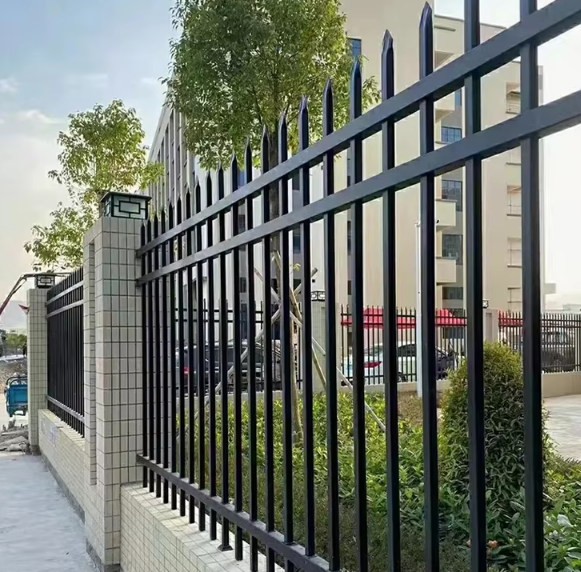
The 42-Inch Baseline That Most Municipalities Start With
Walk through any downtown district or suburban commercial corridor, and the pedestrian guardrails lining sidewalks and bridge walkways look straightforward enough. But the height of those rails isn’t arbitrary. The most widely cited benchmark across U.S. municipalities comes from AASHTO, which specifies a minimum height of 3 feet 6 inches—42 inches—measured from the walking surface to the top of the top rail. That number shows up in the AASHTO Guide for the Planning, Design, and Operation of Pedestrian Facilities, and it’s the default for most state DOTs.
That said, 42 inches isn’t a hard ceiling. OSHA’s standard for guardrails in workplace settings also lands at 42 inches, plus or minus a 3-inch tolerance. So when a municipal engineer specs out a new sidewalk railing along a bridge approach, the starting point is almost always that 42-inch figure. But the real question is: when does that change?
Why Bicycle Traffic Changes the Calculation
Here’s where things get interesting. AASHTO draws a clear distinction between pedestrian-only railing and railing that must accommodate bicycles. For bicycle railing, the minimum height jumps to 54 inches—4 feet 6 inches. That extra foot isn’t about keeping cyclists from falling over the side in the same way it protects pedestrians. It’s about the higher center of gravity on a bicycle and the different dynamics of a potential impact.
The U.S. Forest Service trail bridge catalog echoes this distinction, requiring 42 inches for pedestrian traffic and 54 inches for bicycle or equestrian traffic. So for a municipal project that involves a shared-use path—one where joggers, cyclists, and pedestrians all share the same corridor—the design needs to default to the higher 54-inch standard. Specifying 42 inches on a shared-use bridge would be a miss, and it’s the kind of oversight that gets caught in plan review.
The Curb Factor and How It Affects Effective Height
One detail that trips up less experienced specifiers involves curbs. Municipal guardrails often sit behind or adjacent to a curb, and that curb height contributes to the overall barrier effect. A 6-inch curb paired with a 42-inch rail effectively creates a 48-inch barrier from the roadway surface. But AASHTO measures railing height from the walking surface—the sidewalk or pathway where pedestrians actually stand. That means the curb doesn’t buy any extra height for the railing itself.
However, for applications where the guardrail runs along a roadway with a curb, the mounting height of the rail gets measured differently. Some state DOTs specify that the rail center sits at a certain height above the pavement at the curb face, typically around 23 inches. That’s a different measurement regime entirely, and it’s easy to confuse the two. The takeaway: always confirm whether the spec references the walking surface or the driving surface.
Load Requirements That Influence Structural Height Decisions
Height isn’t just about vertical clearance—it affects structural design too. AASHTO requires pedestrian railings to withstand a uniform load of 50 pounds per linear foot, applied simultaneously in transverse and vertical directions. Posts must be designed for an outward transverse load of wL, where w is that 50 lb/ft figure and L is the post spacing.
A taller railing creates a longer lever arm, which increases the moment at the base of each post. That’s why a 54-inch bicycle railing doesn’t just use more material in the vertical rails—it often requires heavier posts, deeper footings, or closer post spacing compared to a 42-inch pedestrian rail. In practice, this means the height spec drives downstream decisions about foundation design, anchor bolt sizing, and even the choice of post material.
When Local Codes Override AASHTO Recommendations
Here’s a reality check: not every municipality follows AASHTO to the letter. The International Building Code (IBC) requires guards at least 42 inches high for certain occupancies, with a 4-inch sphere test for the lower portion of the rail. But some cities have adopted more stringent local amendments. For example, certain jurisdictions require 48-inch guardrails in high-traffic pedestrian zones, particularly near transit stations or school zones.
One project in the Pacific Northwest involved a pedestrian bridge connecting a light rail station to a mixed-use development. The city’s development code called for 48-inch railings throughout the station area, citing a higher-than-average pedestrian density and the presence of unsupervised children during school commuting hours. The design team had to deviate from the standard AASHTO 42-inch spec and submit structural calculations for the taller system. It added cost, but it passed plan review on the first submission.
A Quick Reference for Common Height Scenarios
| Application | Minimum Height | Governing Standard |
|---|---|---|
| Pedestrian-only sidewalk railing | 42 inches (3'6") | AASHTO 2.7.3.2.1 |
| Bicycle or shared-use path railing | 54 inches (4'6") | AASHTO 2.7.2.2.1 |
| OSHA general industry guardrail | 42 inches ± 3" | OSHA 1910.29(b)(1) |
| IBC building guard (certain occupancies) | 42 inches | IBC 1015.3 |
| Remote trail bridge (pedestrian) | 42 inches | USDA Forest Service |
This table reflects the most common standards encountered in municipal guardrail work. Note that state DOTs sometimes publish their own supplemental specifications that modify these numbers—always check the local jurisdiction’s standard details before finalizing a design.
The Practical Reality of Field Adjustments
Field conditions rarely match the perfectly level surfaces assumed in design drawings. Sidewalk crowns, drainage slopes, and utility conflicts all introduce variables that affect the finished height of a guardrail. Most municipalities allow a tolerance of plus or minus half an inch on the finished railing height, but anything beyond that typically requires a field change order.
A municipal crew in the Midwest once encountered a situation where a newly poured sidewalk ended up a full inch higher than planned due to a grade error. The guardrail posts had already been set, and the top rail came in at 41 inches instead of the specified 42. The city’s inspector flagged it, and the contractor had to shim the rail brackets to bring it back into compliance. That kind of scenario is more common than most specs acknowledge, which is why experienced contractors always leave a little adjustment room in the post installation.
The bottom line: 42 inches is the industry default for pedestrian municipal guardrails, but bicycle traffic, local code amendments, and field conditions can all push that number higher. For shared-use paths, 54 inches is the safer bet. And for any project, the governing authority’s standard details should be the final word—not a generic online reference.
Table of Contents
- The 42-Inch Baseline That Most Municipalities Start With
- Why Bicycle Traffic Changes the Calculation
- The Curb Factor and How It Affects Effective Height
- Load Requirements That Influence Structural Height Decisions
- When Local Codes Override AASHTO Recommendations
- A Quick Reference for Common Height Scenarios
- The Practical Reality of Field Adjustments