
 EN



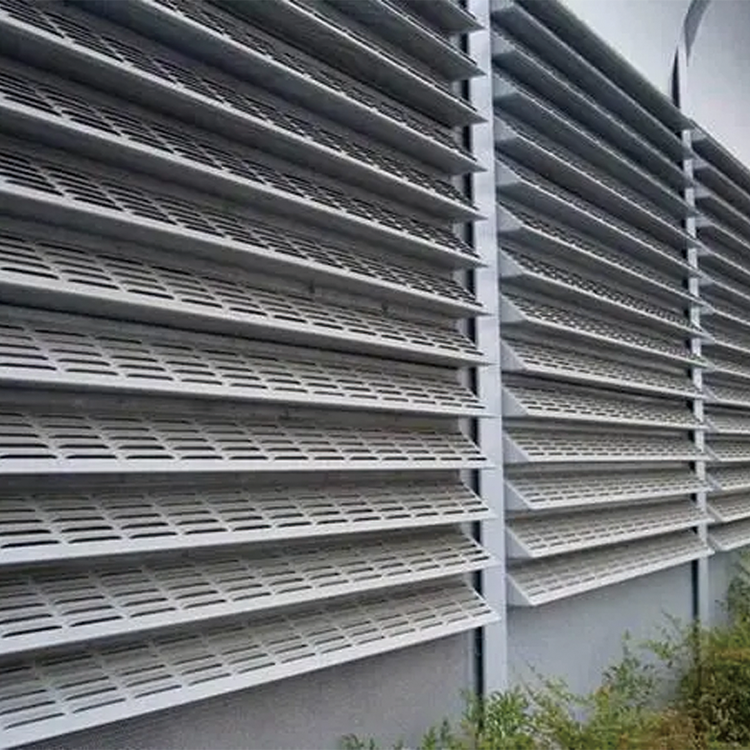
Unique acoustic challenges around rooftop and yard HVAC installations
Outdoor shopping mall HVAC units release continuous broadband noise from rotating fans, compressors and refrigerant flow. These machines often sit on flat rooftops or enclosed service yards close to pedestrian walkways, restaurant terraces and property boundaries. Unlike isolated industrial equipment, mall HVAC systems run for long hours across daytime shopping peaks and nighttime cooling cycles. Noise radiates outward and bounces off hard surfaces such as concrete slabs, metal roof decks and masonry walls.
A soundproof wall creates a physical barrier to interrupt the line-of-sight sound path between equipment and noise-sensitive zones. Performance for outdoor barriers relies heavily on OITC ratings, tested following ASTM E90, which better represents low and mid-frequency transmission than standard STC values used mostly for interior partitions. Many design teams overlook this difference and select materials based only on interior acoustic data.
How uncontrolled HVAC noise hurts retail operation and visitor experience
Persistent mechanical noise changes how shoppers perceive a retail space. Areas near outdoor equipment zones often feel less comfortable, and visitors tend to shorten stays or avoid adjacent seating zones for cafes and pop-up stalls. Local noise ordinances also set clear limits for commercial sites, with measurements collected per ASTM E1780 for fixed outdoor sources. Noncompliance can trigger formal notices and force temporary adjustments to equipment runtime.
The table below compares typical noise outcomes from different treatment approaches around mall HVAC clusters.
| Noise control setup | Approximate OITC rating | Measured noise reduction at boundary | Risk profile for retail sites |
|---|---|---|---|
| No barrier, bare open yard | N/A | Minimal | High, frequent complaints |
| Simple wooden fence without acoustic lining | 22 | Small reduction | Moderate, limited effect on low frequency |
| Fully assembled soundproof wall with absorptive inner face | 36 | Noticeable reduction | Low, stable under regular operation |
| Vibration pads only, no barrier | N/A | Minor | Limited, works best paired with walls |
Simple fencing blocks very little fan and compressor noise, as sound waves diffract over the top edges and travel through gaps between panels. Vibration isolation cuts structure-borne transfer but cannot handle airborne sound moving directly through open air.
Field retrofit case at a suburban shopping complex
During an acoustic retrofit at a suburban shopping complex, crews first added vibration isolators under a bank of rooftop HVAC condensers without installing any surrounding soundproof wall. Post-install checks showed vibration transfer to the roof slab dropped, yet noise readings at the adjacent sidewalk stayed nearly unchanged. Acoustic mapping confirmed most audible sound traveled directly through air rather than building structure. After modular soundproof wall sections were fitted around the equipment perimeter, noise levels along the walkway settled into the acceptable range defined by local rules, and no adjustments to HVAC runtime were required.
This example highlights a common misstep. Vibration treatment addresses only one noise path, and airborne sound remains the dominant issue for exposed outdoor HVAC arrays.
Critical airflow constraints that shape barrier design
A soundproof wall for mall HVAC hardware cannot seal the equipment completely. Fan-driven heat rejection depends on steady intake and exhaust flow. Poorly designed barriers trap hot air, raise condenser head pressure and push the cooling system into inefficient cycling.
- Barrier height and gap layout must leave clear airflow routes for intake air.
- Acoustic louvers or vented panels replace solid sections where air exchange is required.
- Cavity spacing between the wall and equipment prevents hot air recirculation.
Balancing noise attenuation with thermal performance separates competent acoustic layouts from quick low-cost fixes. Many failed installations prioritize noise blocking and ignore thermal limits, which creates costly maintenance headaches later.
Realistic performance boundaries for outdoor sound barriers
Soundproof walls do not eliminate all HVAC noise. Low-frequency compressor sound still bends over barrier tops and diffracts around side ends. Wind, temperature gradients and background activity also shift measured results from lab predictions. Even properly built assemblies lose effectiveness if panel joints, cable cutouts and service access doors leave persistent openings.
These limits mean soundproof walls usually work as one part of a wider package. Tuned silencers on discharge ducts, flexible connections and properly spaced equipment placement all support the main barrier. No single component delivers perfect results on its own.
Value of standardized modular acoustic assemblies for retail mechanical zones
Well-designed soundproof wall assemblies stabilize noise conditions for busy retail environments while preserving the thermal function of outdoor HVAC hardware. Modular layouts adapt to rooftop footprints and service yard shapes without heavy custom framing. KHL supplies acoustic barrier components built for outdoor exposure, with consistent quality control and flexible supply arrangements for commercial mechanical noise projects. Its assemblies follow standard outdoor acoustic testing frameworks and fit smoothly into multi-trade retail construction schedules.
Table of Contents
- Unique acoustic challenges around rooftop and yard HVAC installations
- How uncontrolled HVAC noise hurts retail operation and visitor experience
- Field retrofit case at a suburban shopping complex
- Critical airflow constraints that shape barrier design
- Realistic performance boundaries for outdoor sound barriers
- Value of standardized modular acoustic assemblies for retail mechanical zones