
 EN
EN



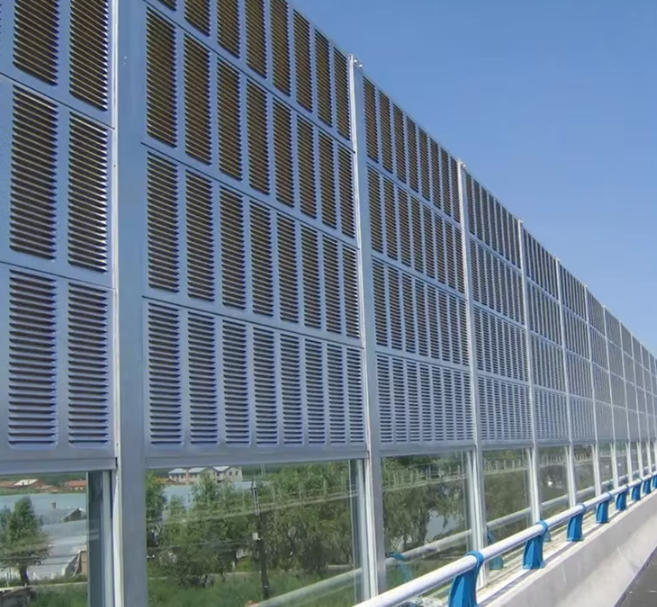
The echo problem that every gym has
Walk into an empty gymnasium and clap your hands. The sound does not just disappear—it bounces. Off the walls, off the floor, off the ceiling. That slap echoes back at you, sometimes multiple times, before it finally fades. Now imagine that same space filled with 200 students, a basketball game, and a public address system. The noise becomes overwhelming.
Gymnasiums are acoustic nightmares. Hard surfaces everywhere—concrete, wood, metal, glass—reflect sound rather than absorbing it. The result is excessive reverberation, where sound lingers for seconds after it is produced. Speech becomes unintelligible. Music sounds muddy. Commands get lost in the noise.
Sound-absorbing boards are the primary solution to this problem. But how do they actually work?
The physics behind the absorption
Sound travels as pressure waves through the air. When those waves hit a hard surface like a concrete wall, most of the energy reflects back into the room. That is echo. A sound-absorbing board does the opposite. It converts sound energy into heat through friction.
The material matters. Sound-absorbing boards are made from porous materials—mineral wool, fiberglass, polyester fibers, or expanded polypropylene-. These materials contain countless tiny air pockets and interconnected pores. When sound waves enter the board, the air molecules vibrate inside those pores. Friction between the moving air and the pore walls converts the sound energy into tiny amounts of heat. The sound does not reflect back. It dissipates.
The effectiveness of this process is measured by the Noise Reduction Coefficient (NRC). An NRC of 0.80 means the board absorbs 80% of the sound that hits it-. High-performance acoustic panels designed for gymnasiums typically achieve NRC ratings of 0.70 to 0.85 or higher-.
Why gyms need more than standard panels
Gymnasiums are not like offices or classrooms. The acoustic demands are higher, and the environment is tougher. Balls hit the walls. Players collide with surfaces. Equipment gets moved around. Standard acoustic panels can be damaged in these conditions.
Gymnasium-specific sound-absorbing boards are built to handle impact. Some use high-density fiberglass cores with additional facing layers to resist punctures and dents-. Others use porous expanded polypropylene, which is lightweight, durable, and naturally resistant to moisture-. The materials are selected not just for acoustic performance but for physical resilience.
The installation location also matters. In gymnasiums, panels are often mounted high on the walls, close to the ceiling, where they capture the most reflected sound-. Ceiling-mounted baffles are another common approach, hanging vertically to absorb sound from all directions-.
The measurable difference
The before-and-after difference in a gymnasium is dramatic. A typical untreated gym can have reverberation times of 4 to 6 seconds or more. That means a single loud sound lingers for half a dozen seconds before it decays. Speech is nearly impossible to understand at that level.
After installing sound-absorbing boards, reverberation times can drop to 1.5 to 2.5 seconds or lower-. In some cases, reductions of 3 seconds or more have been achieved-. That is the difference between a space that is acoustically unusable and one where communication is clear and comfortable.
| Acoustic Metric | Untreated Gymnasium | Treated with Sound-Absorbing Boards |
|---|---|---|
| Reverberation time | 4-6+ seconds | 1.5-2.5 seconds- |
| Speech intelligibility | Poor—words blur together | Good—clear communication |
| Noise Reduction Coefficient (NRC) | 0.10-0.20 (hard surfaces) | 0.70-0.85+- |
| Listener fatigue | High | Low |
A school gym that became usable again
A high school in the Pacific Northwest had a gymnasium that was notorious among teachers. Physical education classes were chaotic—not because of the students, but because of the noise. The gym was a rectangular box with concrete block walls, a hardwood floor, and a metal roof. Reverberation time measured over 5 seconds.
The school district installed sound-absorbing boards on the upper walls and ceiling baffles throughout the space. The difference was immediate. Teachers reported that they no longer needed to shout to be heard. Students could follow instructions without confusion. The basketball coach noted that players could hear each other calling out plays during games for the first time. The project cost was modest compared to the improvement in usability.
The practical limits of acoustic treatment
Sound-absorbing boards are effective, but they are not magic. They address reverberation—the lingering of sound within a space. They do not block sound from traveling between rooms. That requires different strategies, such as mass-loaded barriers or decoupled construction.
The placement of panels also matters. Randomly installing a few boards on one wall will not produce the same results as a properly designed acoustic treatment. The coverage area, panel thickness, and mounting method all affect performance. A professional acoustic assessment is often necessary to determine the right solution for a specific gymnasium.
There is also the question of maintenance. Gymnasium panels need to withstand impacts and cleaning. Some materials are more durable than others. High-impact panels with fabric facings can be cleaned with mild detergents, but abrasive cleaners should be avoided.
Why the investment pays off
Gymnasiums are multipurpose spaces. They host physical education, team practices, competitive games, assemblies, concerts, and community events. Poor acoustics affect every one of those activities. Speech is hard to follow. Music sounds distorted. The space feels stressful rather than inviting.
Sound-absorbing boards transform the experience. They reduce echo, improve speech clarity, and make the space more comfortable for everyone who uses it. The investment is not just about acoustics—it is about making the facility work for its intended purposes.
Companies like KHL manufacture sound-absorbing boards designed for gymnasiums and other large spaces, with products that balance acoustic performance, durability, and ease of installation. Their work across educational and recreational facilities shows that the right acoustic treatment can turn a noisy echo chamber into a space where people can actually hear each other.