
 EN
EN



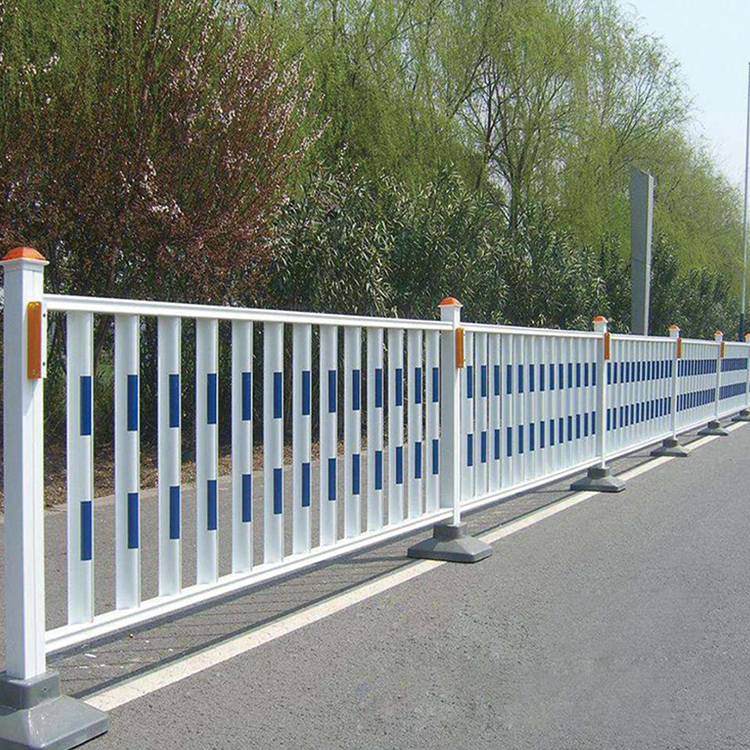
More Than a Line of Metal
Drive down any busy urban thoroughfare and they are everywhere—those waist-high barriers dividing lanes, shielding sidewalks, and channeling foot traffic toward crosswalks. Most drivers and pedestrians barely notice them. But remove them from a single intersection, and the chaos would be immediate. Municipal guardrails are not decorative. They are not optional. They are a fundamental piece of urban infrastructure that performs a set of critical functions, often all at once.
The primary function sounds simple: separation. But separation on a busy road means multiple things simultaneously. It means keeping vehicles in their designated travel paths. It means preventing pedestrians from wandering into active traffic lanes. It means protecting workers during construction. It means absorbing impact energy when a vehicle leaves its lane. Each of these roles overlaps and reinforces the others, creating a system that reduces the frequency and severity of incidents on roads that carry thousands of vehicles daily.
Physical Separation as the First Line of Defense
The most obvious function of a municipal guardrail is creating a physical barrier between different road users. On divided highways, median guardrails prevent head-on collisions by keeping opposing traffic streams apart. On urban streets, roadside guardrails protect pedestrians on sidewalks from vehicles that drift or lose control. At construction zones, temporary barriers separate active work areas from passing traffic, giving workers a protected space to operate.
This separation is not theoretical. Crash data consistently shows that roadside barriers reduce the severity of run-off-road accidents. When a vehicle leaves the travel lane, a properly designed guardrail redirects it back onto the road or slows it down before it can strike a fixed object, roll over, or enter a pedestrian area. The barrier does not prevent the accident from happening—but it prevents the accident from becoming something worse.
One municipal traffic engineer in the Northeast described a before-and-after comparison on a particularly hazardous stretch of urban highway. The road had a history of vehicles crossing the median and colliding with oncoming traffic. After installing a continuous median guardrail, the number of cross-median collisions dropped significantly over the following years. The barrier did not change driver behavior; it changed the consequences of driver error. That is the essence of passive safety infrastructure—it works even when people make mistakes.
Guiding Traffic Flow Without Signs or Signals
Guardrails also function as traffic management devices, not just safety barriers. Their placement influences how drivers position their vehicles within lanes. A continuous barrier along a curve encourages drivers to maintain a consistent line through the turn. A median barrier reduces the visual distraction of oncoming headlights at night. Channelizing devices at intersections and ramps guide vehicles into the correct approach paths without requiring additional signage or pavement markings.
This guidance function is particularly valuable in work zones, where lane configurations change frequently. Temporary guardrails establish clear boundaries that drivers can see and react to, reducing confusion and the abrupt lane changes that cause rear-end collisions. The visual cue of a solid barrier communicates “do not cross” more effectively than a painted line or a series of cones. Drivers may not consciously think about it, but their behavior adjusts to the presence of the barrier.
Pedestrian Protection in High-Density Environments
Busy roads are not just vehicle corridors; they are also pedestrian environments. Sidewalks, bus stops, crosswalks, and building entrances all bring people into close proximity with moving traffic. Municipal guardrails create a buffer zone that reduces the risk of pedestrian-vehicle conflicts.
On roads with high foot traffic, guardrails channel pedestrians toward designated crossing points rather than allowing them to cross mid-block. This does not eliminate jaywalking entirely, but it makes it more difficult and less convenient, which shifts behavior over time. The barrier also provides a physical stop for pedestrians who might otherwise step off the curb without looking—a particularly important function near schools, transit hubs, and commercial districts.
The trade-off is worth acknowledging. Guardrails can be visually intrusive, and some studies note that they may not always be the best solution in every context. In areas where pedestrian volumes are very high, other treatments—like raised crosswalks or signalized crossings—may be more appropriate. But on roads where vehicle speeds and volumes are elevated, the guardrail remains one of the most effective tools for keeping pedestrians safe.
Impact Absorption and Vehicle Redirection
When a guardrail does its job, most drivers never know it happened. The barrier absorbs the energy of a glancing impact, redirects the vehicle along the barrier face, and brings it to a controlled stop or returns it to the roadway. This happens in a fraction of a second, and the vehicle sustains less damage than it would have from striking a tree, a utility pole, or another vehicle.
The engineering behind this performance is precise. Guardrails are designed with specific deflection characteristics—they bend and flex in a controlled manner to absorb energy rather than transferring all of it back to the vehicle. The posts are spaced and anchored to provide consistent resistance. The rail height is set to engage the vehicle’s bumper structure rather than underriding or overriding the barrier. These details matter. A guardrail that is too stiff can cause a vehicle to vault or roll. One that is too flexible may not redirect the vehicle at all.
Standards organizations have developed specifications to ensure consistent performance. ASTM, for example, maintains standards for zinc-coated steel wire rope and fittings used in highway guardrail construction. These standards provide a baseline that manufacturers and installers must meet, ensuring that guardrails perform as intended across different environments and conditions.
The Role of Visibility in Nighttime and Inclement Weather
A guardrail that cannot be seen is a guardrail that cannot do its job. Visibility is a critical but often overlooked function of municipal guardrails. Reflective elements, bright colors, and consistent lighting help drivers perceive the barrier’s location, especially at night or in rain, fog, and snow.
Poor visibility contributes to a significant portion of guardrail-related incidents. When drivers cannot clearly see the edge of the road or the median divider, they may drift too close or fail to correct in time. Reflective markings and delineators address this by making the barrier visible from a distance, giving drivers more time to react. In some jurisdictions, guardrails are also equipped with lighting or retroreflective sheeting that remains effective even when wet.
The practical impact is measurable. Roadways with well-marked guardrails tend to have fewer off-road excursions and lower severity crashes in nighttime conditions. The barrier itself does not change, but its visibility makes it more effective.
Temporary Versus Permanent: Different Demands, Same Core Function
Municipal guardrails come in two broad categories: permanent and temporary. Permanent guardrails are fixed installations along highways, bridges, and high-risk roadside locations. They are designed for long-term durability and are typically anchored into concrete foundations or deep post settings.
Temporary guardrails serve a different purpose. They are deployed during construction, maintenance, or special events, and they need to be movable, reconfigurable, and quick to install. The core function remains the same—separation and protection—but the implementation must accommodate frequent relocation and varying site conditions.
The temporary market has grown significantly as urban infrastructure ages and requires more frequent repair and replacement. Project managers increasingly look for barriers that can be deployed rapidly, withstand site conditions, and be removed just as quickly when the work is complete. This places a premium on modular designs and lightweight materials that do not sacrifice structural integrity.
What Happens When Guardrails Are Missing
The absence of guardrails tells their story as clearly as their presence. On roads where guardrails have been removed for construction and not yet replaced, incident rates tend to rise. Drivers lose the visual cue that defines the road edge. Pedestrians have less protection from errant vehicles. The margin for error shrinks.
In one midwestern city, a section of urban highway underwent a multi-year reconstruction project. During the first phase, temporary guardrails were installed and maintained. Incident rates remained within expected ranges. During the second phase, a scheduling gap left a half-mile stretch without any barrier between the travel lanes and a deep excavation. Within weeks, multiple vehicles had crossed into the work zone. No fatalities occurred, but the close calls were enough to prompt an expedited installation of temporary barriers. The lesson was clear: the guardrail’s function is not theoretical. It is operational, immediate, and indispensable.
Standards, Specifications, and the Supply Chain
The performance of a municipal guardrail depends on more than just its design. Material quality, manufacturing consistency, and installation practices all affect how the barrier performs when it matters most. Galvanized steel is the predominant material for both permanent and temporary guardrails because of its corrosion resistance and strength-to-weight ratio.
Manufacturers with established quality systems and production capacity play a critical role in ensuring that guardrails meet specifications. Shenzhen Kanghailong, for example, produces modern zinc steel safety barriers designed for municipal road applications. The company’s focus on zinc-coated steel and modular design reflects an understanding that guardrails must balance durability, mobility, and ease of deployment. For municipalities and contractors, partnering with suppliers who understand both the technical requirements and the operational realities of road safety makes a tangible difference in project outcomes.
Table of Contents
- More Than a Line of Metal
- Physical Separation as the First Line of Defense
- Guiding Traffic Flow Without Signs or Signals
- Pedestrian Protection in High-Density Environments
- Impact Absorption and Vehicle Redirection
- The Role of Visibility in Nighttime and Inclement Weather
- Temporary Versus Permanent: Different Demands, Same Core Function
- What Happens When Guardrails Are Missing
- Standards, Specifications, and the Supply Chain