
 EN
EN



Two Completely Different Jobs, One Confusing Name
Walk into any acoustics supply catalog and the terminology blurs together fast. Sound-absorbing board. Soundproof panel. Acoustic panel. Noise barrier. They all sound like they do the same thing—reduce noise. But they don't. Not even close.
A sound-absorbing board is designed to soak up sound energy within a space. It reduces echo, controls reverberation, and improves speech clarity. A soundproof panel is designed to block sound from traveling from one space to another. It prevents your neighbor's music from coming through the wall and keeps your conversation from leaking out.
The confusion is understandable. Both are flat panels. Both are used in buildings. Both are called "acoustic" something. But the physics underneath couldn't be more different. One manages sound that's already in the room. The other stops sound from entering or leaving. Getting them mixed up is one of the most expensive mistakes in architectural acoustics.
The Physics: Absorption vs. Transmission Loss
Here's the core difference. Sound-absorbing boards work through a process called porous absorption. Sound waves enter the material—which is full of tiny interconnected pores and cavities—and the acoustic energy is converted into heat through friction as the air molecules vibrate against the pore walls. The sound doesn't disappear; it gets transformed. The key metric for an absorbing board is the Noise Reduction Coefficient (NRC), which measures how much sound energy is absorbed rather than reflected.
Soundproof panels work through a completely different mechanism: mass law. A soundproof panel is dense and non-porous. Sound waves hit the surface, and instead of entering the material, most of the energy is reflected back. The small fraction that does penetrate is attenuated by the panel's mass. The key metric for a soundproof panel is Sound Transmission Class (STC), which measures how much sound is blocked from passing through.
To put numbers on it: a typical acoustic foam panel might have an NRC of 0.7 to 0.95 but an STC of only 15 to 25. It's great at absorbing sound inside a room but terrible at stopping sound from going through the wall. A mass-loaded vinyl barrier, by contrast, might have an STC of 27 or higher but an NRC near zero. It blocks sound effectively but does nothing to improve the acoustics inside the room.
Where Each One Actually Works
The application tells you everything. Sound-absorbing boards belong in spaces where the problem is echo, reverberation, and poor speech intelligibility. Recording studios, conference rooms, auditoriums, open-plan offices—these are classic absorbing-board territories. The goal is to make the room sound better for the people inside it.
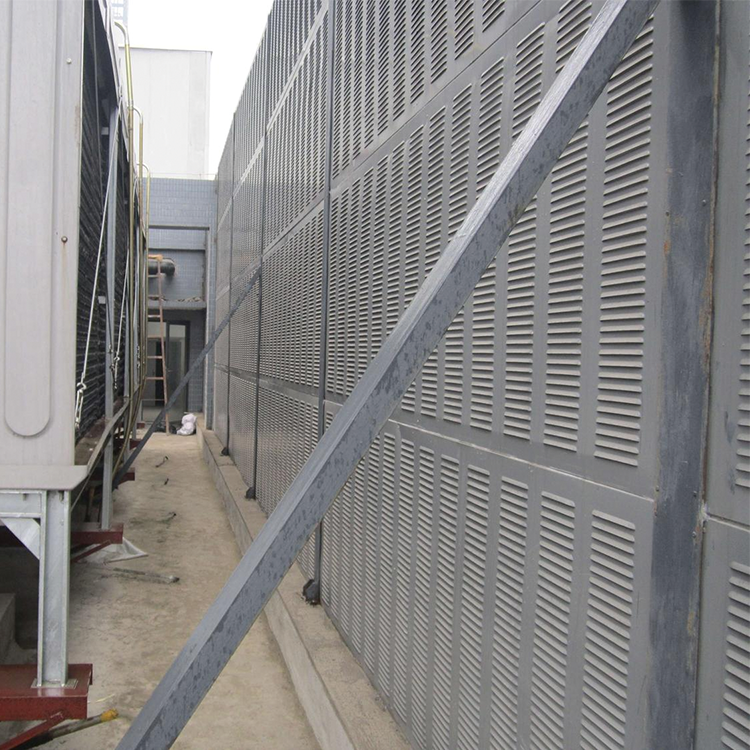
Soundproof panels belong in spaces where the problem is sound leaking in or out. Party walls between apartments, mechanical equipment enclosures, home theater rooms, hotel guest rooms—these are soundproofing applications. The goal is to isolate one space from another.
The critical insight is that these are not substitutes. Putting sound-absorbing panels on a shared apartment wall will not stop your neighbor's TV from coming through. It will make your side of the wall sound less echoey—which might be nice—but the transmission loss across the wall remains unchanged. Conversely, covering a recording studio ceiling with soundproof panels won't fix the flutter echo that's ruining the vocal takes. The panels block sound from leaving the studio, but they do nothing to manage the reflections inside.
Construction and Material Differences
The physical construction of these two product categories reflects their different jobs. Sound-absorbing boards are lightweight, porous, and often fibrous or foam-based. They might be made from polyester fiber, glass wool, rock wool, or open-cell foam. The key design feature is permeability—sound needs to be able to enter the material and travel through its internal structure. The more tortuous the path, the more energy gets dissipated.
Soundproof panels are heavy, dense, and non-porous. They might be made from mass-loaded vinyl, gypsum board with damping layers, or composite laminates of different densities. The key design feature is mass per unit area. The heavier the panel, the more sound it blocks—up to a point. Doubling the mass increases the transmission loss by about 6 dB, which is a useful rule of thumb but not a guarantee across all frequencies.
There are also hybrid products that combine both functions—a dense core for blocking sound and a porous facing for absorption. These are common in high-performance acoustic wall systems. But even in hybrids, the two functions remain distinct; they're just packaged together.
| Property | Sound-Absorbing Board | Soundproof Panel |
|---|---|---|
| Primary function | Absorb sound energy within a space | Block sound transmission between spaces |
| Working mechanism | Porous absorption (friction converts sound to heat) | Mass law (density reflects sound energy) |
| Key metric | NRC (Noise Reduction Coefficient) | STC (Sound Transmission Class) |
| Typical NRC range | 0.5 – 0.95 | Near zero (not applicable) |
| Typical STC range | 15 – 25 | 27 – 55+ |
| Material characteristics | Lightweight, porous, fibrous or foam | Heavy, dense, non-porous |
| Best application | Interior acoustics (echo, reverb control) | Sound isolation (privacy, noise control) |
The Cost of Confusing the Two
This isn't academic. Mis-specifying these products costs real money. A commercial office project in the southeastern United States installed hundreds of sound-absorbing ceiling panels in a conference room that shared a wall with a noisy data center. The panels made the room sound pleasant inside—less echo, clearer speech—but did nothing to stop the low-frequency hum of the servers from penetrating through the wall. The client spent six figures on panels and got zero improvement in the problem they actually cared about.
The correct fix would have been soundproof panels or a mass-loaded barrier on the shared wall, combined with proper sealing of gaps and penetrations. The absorbing panels weren't wrong for the space—they just weren't solving the right problem.
This kind of thing happens all the time because the terminology is confusing and because sales catalogs often blur the lines. A panel described as "acoustic" could mean either absorption or isolation. The only way to know is to look at the data: NRC for absorption, STC for isolation.
When You Actually Need Both
Here's the tricky part: many spaces need both functions, just in different places. A recording studio needs soundproofing on the walls to keep outside noise out and inside sound in. It also needs sound-absorbing treatment on the interior surfaces to control reflections and achieve a flat frequency response. Same room, two different products, two different jobs.
A home theater is the same way. Soundproof the walls to keep the bass from bothering the neighbors. Put absorption on the walls and ceiling to control slap echo and improve dialogue clarity. The soundproofing keeps the sound in; the absorption makes the sound that stays in sound better.
The mistake is thinking one product can do both. A soundproof panel won't fix a room's acoustics. A sound-absorbing board won't stop sound from leaking out. They're complementary tools, not interchangeable ones.
A Real-World Case: The Restaurant That Got It Backward
A restaurant chain in a mid-sized city opened a new location in a mixed-use building with residential units above. The neighbors started complaining within a week—music from the restaurant's sound system was clearly audible in the upstairs apartments.
The restaurant's response was to install acoustic panels on the ceiling. They chose fabric-wrapped fiberglass boards—excellent sound absorbers, high NRC. The panels reduced the echo in the dining room, which made the music sound clearer and actually improved the overall experience for diners. But the complaints from upstairs got worse. The absorption had done nothing to reduce the sound transmission through the ceiling assembly. In fact, by reducing the reverberant energy in the room, the panels may have made the direct sound from the speakers more prominent—and more audible upstairs.
The correct solution was a soundproofing treatment on the ceiling: mass-loaded vinyl, resilient channels, and proper sealing of penetrations. The absorbing panels were a good product used in the wrong application. The chain ended up spending twice—first on the panels, then on the proper soundproofing.
What the Standards Say
For sound-absorbing materials, the Noise Reduction Coefficient is the standard metric. According to HJ/T90-2004, the NRC of a sound absorption material used in a noise barrier should be greater than 0.5. For interior acoustic applications, the requirements vary by use case, but an NRC of 0.7 or higher is generally considered high-performance.
For soundproofing, STC is the standard. STC 45 is widely treated as the point where conversations stop being understood through a wall, and STC 50 is a common baseline for commercial partitions. These are not arbitrary numbers—they correlate directly with real-world performance in occupied spaces.
| Application | Primary Need | Recommended Product | Why |
|---|---|---|---|
| Recording studio walls | Sound isolation | Soundproof panel (high STC) | Keep external noise out |
| Recording studio interior | Echo control | Sound-absorbing board (high NRC) | Manage reflections |
| Apartment party wall | Privacy | Soundproof panel (STC 50+) | Stop sound transmission |
| Conference room | Speech clarity | Sound-absorbing board (NRC 0.7+) | Reduce reverberation |
| Mechanical room | Equipment noise containment | Soundproof panel (mass-loaded) | Contain noise at source |
The Bottom Line on Choosing
The question isn't which product is "better." The question is which problem needs solving. If the issue is echo, reverberation, or poor sound quality inside a room, the answer is sound-absorbing boards. If the issue is sound leaking in from outside or out to neighbors, the answer is soundproof panels.
Understanding the difference isn't just technical trivia—it's the difference between solving the problem and wasting the budget. Manufacturers with deep expertise in both product categories understand this distinction and build their offerings accordingly. Companies like Kanghailong, with experience across diverse acoustic applications, recognize that the right product for the job depends entirely on understanding what the sound is doing and what outcome the space actually needs.
Table of Contents
- Two Completely Different Jobs, One Confusing Name
- The Physics: Absorption vs. Transmission Loss
- Where Each One Actually Works
- Construction and Material Differences
- The Cost of Confusing the Two
- When You Actually Need Both
- A Real-World Case: The Restaurant That Got It Backward
- What the Standards Say
- The Bottom Line on Choosing