
 EN



Why Plain Walkways Become Death Traps When Oil and Water Mix
Walk into any busy industrial processing facility, offshore rig, or wastewater treatment plant, and the floor conditions rarely stay dry for long. Hydraulic fluid leaks from aging seals, condensation drips off chilled pipes, and rain blows in through open loading bays. On a standard smooth bar floor, even a thin film of grease or morning frost turns a routine inspection route into a skating rink. Workers end up shuffling their feet rather than walking normally, which slows down operations and creates constant physical fatigue across a twelve-hour shift.
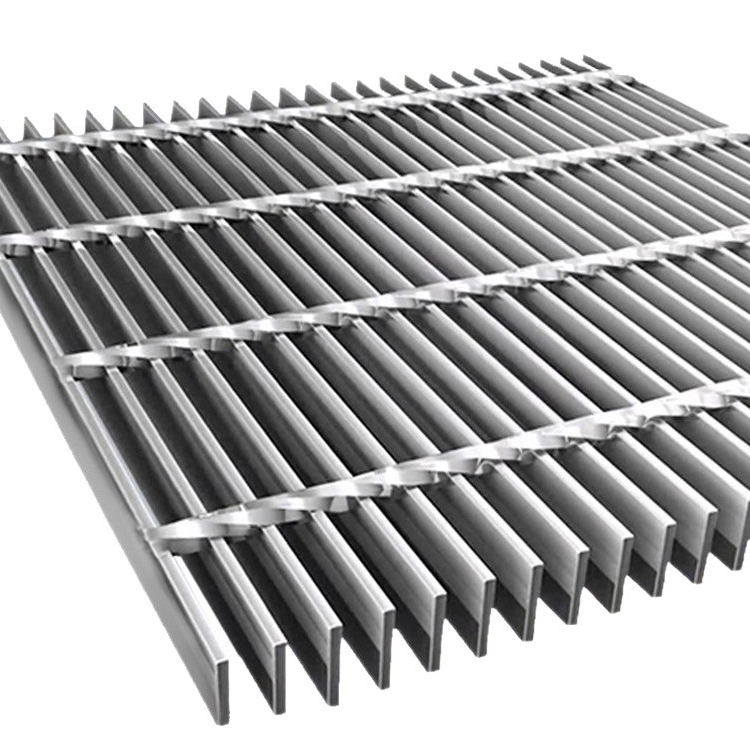
Upgrading high-risk zones with a serrated steel grating solves this exact problem by altering the physics of foot-to-floor contact. Instead of relying on flat friction that disappears the moment liquid enters the equation, the notched top edge of each bearing bar bites directly into the rubber outsole of a work boot. The jagged peaks break through the surface tension of thick mud, petroleum, or ice, establishing mechanical interlock with every step. Even when heavy lubricants coat the catwalk, the raised teeth push through the slick layer to grip the footwear securely.
According to data from the U.S. Bureau of Labor Statistics, slips, trips, and falls consistently account for nearly twenty percent of all nonfatal workplace injuries involving days away from work across heavy manufacturing and construction sectors. Facility managers who replace smooth steel plates or flat grating with notched profiles see an immediate drop in near-miss incident reports. The investment pays for itself the very first time a technician avoids a nasty fall while carrying heavy calibration gear up an outdoor stairway.
How Tooth Geometry and Open Grid Design Work Together Underfoot
The secret behind reliable traction lies in the combination of tooth profile and open area ratio. A well-engineered notched bar features semicircular or wave-like cutouts stamped along the upper edge of the load-bearing flat steel. When a worker steps down, body weight concentrates on the small surface area of those elevated peaks. This localized high pressure forces liquid and slush down into the concave valleys between the teeth, keeping the actual contact points remarkably dry and stable.
At the same time, the open grid layout ensures that standing water, chemical spills, and industrial debris have nowhere to pool. In a typical bar grating configuration, roughly eighty percent of the total surface area consists of open space. Rainwater, washdown foam, and spilled coolant pass straight through to the drainage sub-floor below instead of sitting on top waiting to freeze or form algae. Comparing different industrial flooring options highlights why notched bar grids dominate wet and oily environments.
| Flooring Type | Wet COF (Coefficient of Friction) | Drainage Open Area | Oil and Grease Resistance | Maintenance Effort |
|---|---|---|---|---|
| Smooth Checkered Plate | 0.25 to 0.35 | 0% | Poor | High (frequent scraping) |
| Plain Bar Grating | 0.40 to 0.50 | 75% to 80% | Moderate | Low |
| Serrated Steel Grating | 0.65 to 0.80 | 75% to 80% | Excellent | Very Low |
| Fiberglass Molded Grid | 0.55 to 0.70 | 65% to 70% | Good | Moderate |
These figures reflect standard pendulum slip testing protocols outlined under ANSI/NFSI B101.1 and OSHA 1910.22 guidelines for walking-working surfaces, where a static coefficient of friction above 0.50 is generally preferred for safe industrial transit. While smooth diamond plate looks rugged on paper, its zero-drainage surface traps puddles that quickly drop friction values into the danger zone once oil gets mixed in.
Real World Lessons From a Coastal Chemical Plant Retrofit
Nothing proves the value of proper anti-slip flooring quite like a real retrofit in a harsh environment. During a major turnaround project at a coastal petrochemical processing plant, the safety engineering team audited three elevated pipe rack walkways that had become notorious for winter and monsoon slip hazards. Originally built with standard flat-top carbon steel panels, these outdoor platforms were constantly exposed to salty sea mist, cooling tower drift, and occasional hydrocarbon condensates. Maintenance crews had tried applying gritty epoxy anti-slip paint twice over three years, but the coating kept peeling off under heavy boot traffic and chemical exposure.
The engineering team decided to strip out the old panels along the inclined ramps, stair treads, and valve access platforms, replacing them with hot-dip galvanized notched bar panels meeting NAAMM MBG 531 structural specifications. To handle the corrosive marine air, the fabricator applied a zinc coating meeting ASTM A123 standards after all cutting and stamping work was completed. The difference was obvious during the first heavy rainstorm after commissioning. Operators moving portable pumps across the thirty-foot elevation reported solid footing even when their boots were caked in wet clay from the ground level. Over the following eighteen months, the plant recorded zero slip incidents on the upgraded levels, whereas the previous two years had seen four minor sprains and one serious bruised rib on those exact same walkways.
Balancing Structural Load Capacity With Notch Depth
Any honest discussion about notched grating has to address the trade-off between slip resistance and structural strength. Stamping teeth into the top edge of a bearing bar removes a small fraction of the steel cross-section. Typically, the serration depth runs around two to three millimeters. Because the effective load-bearing height of the bar starts at the bottom of the notch rather than the very top peak, a notched bar has slightly less bending stiffness than a plain bar of the exact same nominal height.
Experienced structural engineers account for this during the specification phase by following three practical rules:
Step up the bearing bar depth by one standard size increment when spanning long distances or supporting rolling wheel loads, such as moving from a 30mm bar to a 35mm bar.
Specify plain bars for calm indoor storage mezzanines where forklift tires travel frequently, reserving the toothed panels for ramps, washdown bays, catwalks, and outdoor stairs.
Check the weld integrity at every crossbar intersection, since high-pressure resistance welding keeps the grid rigid and prevents individual bars from twisting under eccentric foot loads.
Another point worth noting is ergonomics and maintenance accessibility. Because the jagged edges are designed to grip rubber soles aggressively, kneeling directly on a serrated surface during equipment repair can be tough on a mechanic's knees and can tear up protective coveralls. Smart facility layouts keep protective rubber kneeling pads near major pump stations or specify smooth grates in dry indoor control cabinets while strictly enforcing serrated profiles on wet perimeter walkways, inclined walkways, and exterior fire escapes.
Choosing the Right Material Finish and Supply Partner
Getting the maximum lifespan out of safety flooring requires matching the surface treatment to the surrounding atmosphere. Untreated carbon steel rusts quickly once moisture settles into the stamped notches, which eventually dulls the sharp peaks that provide the grip. Hot-dip galvanizing remains the workhorse choice for most outdoor infrastructure, utility plants, and mining operations, as the molten zinc metallurgically bonds to the steel and protects the sharp corners of every tooth. In food processing zones or coastal sites with heavy chloride exposure, stainless steel grades like 304 or 316 keep the serrated edges crisp without risking flaking coatings.
Sourcing consistent, well-formed panels is just as important as picking the right alloy. Poorly stamped bars often suffer from uneven tooth heights or burrs that catch on work boots and create a tripping hazard instead of preventing a slip. Working with an established manufacturer like KHL ensures that the press-welding pressure, bar spacing, and serration depth stay uniform across thousands of square meters of decking. With strong automated production lines, strict dimensional quality control, and reliable export logistics, KHL helps project contractors and plant engineers keep their delivery schedules on track while building safer workplaces from the ground up.