
 EN



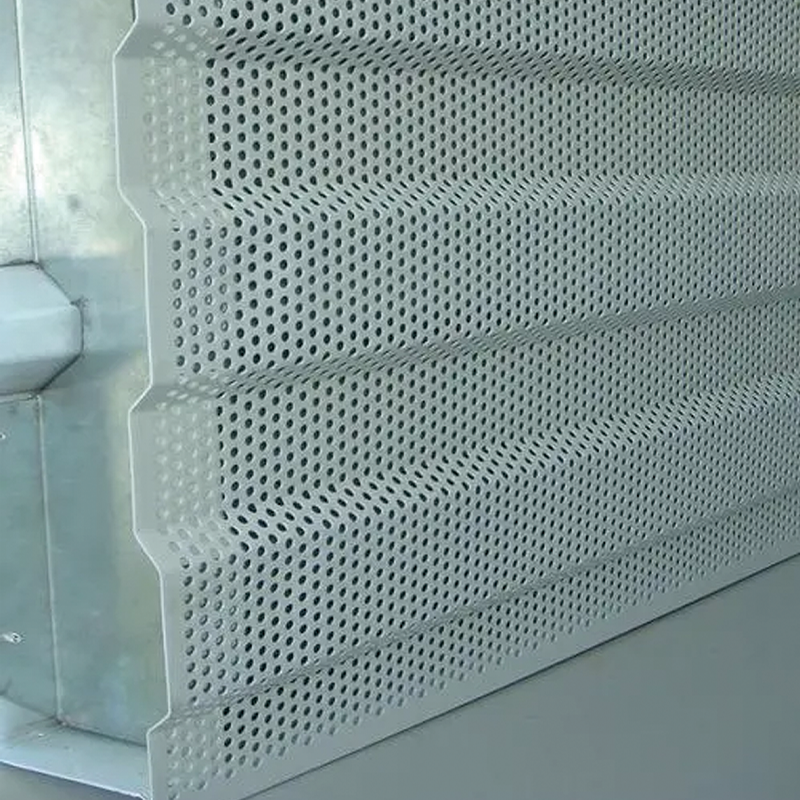
A wall that blocks noise, keeps moisture out, and holds a fire rating sounds like a straightforward spec sheet. In practice, those three demands pull in different directions, and the conflicts show up late, usually during commissioning or the first washdown.
Soundproofing depends on mass and decoupling. Waterproofing depends on continuous barriers with no absorptive pathways. Fireproofing depends on non-combustible or intumescent chemistry that does not release toxic smoke. A dense, sealed, non-combustible wall is easy to draw. Making it perform acoustically without turning the surface into a moisture trap is where cleanroom and industrial projects get into trouble.
The mistake is treating the three as separate line items to be checked off. They share the same substrate, the same joints, and the same penetrations. When one is optimized in isolation, the other two usually pay for it.
Why porous absorbers are a bad fit for washdown zones
The acoustic industry has a long love affair with open-cell foams and mineral wool. Those materials work because sound energy enters the pores and gets converted to heat. The same open structure also invites water, cleaning chemicals, and microbial growth. In a pharmaceutical or food-grade space, a fibrous absorber behind a perforated facing becomes a reservoir that never fully dries.
Cleanroom acoustic design guidance is blunt about this: glass wool and foam are generally unsuitable because of particle shedding, water absorption, or chemical degradation. The surface has to be washable and non-absorbent, and the core has to stay dimensionally stable after repeated cleaning cycles.
That rules out the cheapest acoustic solution. What remains is a narrower set of options: sealed composite panels with a non-fibrous core, or absorptive facings that are fully encapsulated and cleanable. Neither is a commodity purchase.
Sealing beats stuffing: where waterproofing actually lives
Waterproofing a soundproof wall is rarely about the panel face. Coated steel skins handle splashes without drama. The vulnerability sits at the perimeter, the panel-to-panel joint, the floor junction, and every penetration for conduit, ductwork, or piping.
A wall can carry a Class A flame spread rating and still leak at the base track because the sealant was tooled against a dusty substrate. Acoustic leakage follows the same path. A gap that passes water also passes sound, and a 1 mm unsealed crack can drag a laboratory-rated partition down to field performance that resembles a swinging door.
The practical sequence is to design the joint as a three-stage assembly: a compressible gasket for acoustic decoupling, a continuous wet seal for moisture, and a mechanically protected cover for abrasion. Sealant alone is not a waterproofing strategy. It is a maintenance item.
Separating mass from stiffness without adding water weight
Gypsum-based cores bring density, and density helps with sound transmission loss. Gypsum also carries chemically bound water that releases as vapor under fire exposure, which slows heat transfer through the panel. That is a useful fire mechanism. The problem is weight. A thick gypsum core in a large modular panel becomes heavy enough to demand more structural support and more careful handling on site.
Aluminum honeycomb cores flip the logic. The hexagonal cell structure delivers stiffness at low mass, so the panel stays flat across large spans without a thick, water-hungry core. Flatness matters in cleanrooms because surface texture can disturb laminar airflow near the wall boundary. A honeycomb skin with a thin gypsum layer and a sealed coating can hit a workable balance: enough mass for acoustic performance, enough stiffness to avoid a heavy monolithic slab, and no open-cell pathway for moisture.
The trade-off is honest. A thin composite will not match the low-frequency transmission loss of a poured concrete wall. It is a wall system, not a bunker.
What the test numbers look like when the system is built right
Single-number ratings hide the assembly. A panel’s fire resistance and acoustic insulation are properties of the whole buildup, including the frame, the joints, and the penetrations. The table below pulls from a published wall system comparison and shows how different constructions trade weight, fire time, and sound insulation against each other.
| Construction (nominal thickness) | Approx. weight | Fire rating (BS 476 Pt 20) | Sound insulation | Wet-area use |
|---|---|---|---|---|
| Finewall system, 100 mm | 225 kg/m² | 75 minutes | 41 dB | Yes |
| Hollow-core panel, 90 mm | 240 kg/m² | 120 minutes | 42 dB | Yes |
| ALC panel, 100 mm | 195 kg/m² | 240 minutes | 38 dB | Yes |
The pattern is not linear. The heaviest wall does not automatically give the best acoustic result, and the longest fire rating comes with a lower sound number. That is why a wall specified on a single headline value is usually a wall that will be value-engineered into a problem. The better question is which combination of fire time, transmission loss, and moisture exposure the room actually needs, then which buildup delivers that combination without a weight penalty the structure cannot carry.
A field example from a refinery control room retrofit
A control tower retrofit at a refinery in Jamnagar required acoustic and fire-resistant wall treatments to be fitted around live operations, with minimal disruption to the facility. The acoustic intent was to separate the control room from process noise. The fire intent was to maintain compartmentation under refinery safety standards. The installation had to happen in phases around an operating plant.
The lesson from that kind of project is not about a specific panel brand. It is about coordination. Acoustic and fire-rated assemblies were sequenced together because chasing one trade after the other would have meant reopening sealed joints. Once a fire-rated joint is broken to run a conduit, the acoustic seal is gone too. Retrofits fail when the wall is treated as a finish rather than a system with a defined penetration strategy.
Where KHL fits into a specification that has to hold up
A wall that claims all three performance attributes needs a manufacturing process that can hold tolerances across panel batches, not just on a sample. KHL works in modular cleanroom and industrial panel systems, and the practical advantage of a factory-controlled panel is consistency at the joint: the same edge geometry, the same core density range, and the same coating thickness from one unit to the next. That consistency is what makes a sealant bead behave predictably in the field. For projects weighing acoustic, moisture, and fire requirements together, the conversation is less about a catalog page and more about how the panel, the frame, and the seal detail are supplied as one buildable package.
Table of Contents
- Why porous absorbers are a bad fit for washdown zones
- Sealing beats stuffing: where waterproofing actually lives
- Separating mass from stiffness without adding water weight
- What the test numbers look like when the system is built right
- A field example from a refinery control room retrofit
- Where KHL fits into a specification that has to hold up