
 EN
EN



The Problem with Building for Today's Needs Only
There's a certain kind of regret that sets in about six months after a fixed wall goes up. The space that seemed perfectly sized for a small rehearsal studio suddenly needs to accommodate a full band. The quiet office that worked for two people now has to hold six. The recording booth that was just right for voiceover work now needs to track a drum kit. And that permanent, non-negotiable wall? It's in the wrong place, and moving it means demolition, drywall dust, and a budget that wasn't planned for.
This is the reality of conventional construction. A soundproof wall built with standard studs, insulation, and multiple layers of drywall is effective—but it's also permanent. Modify it, and the acoustic performance goes out the window. Patch it, and the weak points become obvious. The smarter approach, for anyone thinking beyond the immediate use case, is a modular soundproof wall. Not because it sounds better than a fixed wall—it can perform just as well—but because it doesn't lock the space into a single configuration forever.
How Modular Construction Maintains Acoustic Integrity
The skepticism is understandable. How can something that comes apart possibly perform as well as something that's nailed, screwed, and sealed into place? The answer lies in the engineering of the joints and the predictability of the materials.
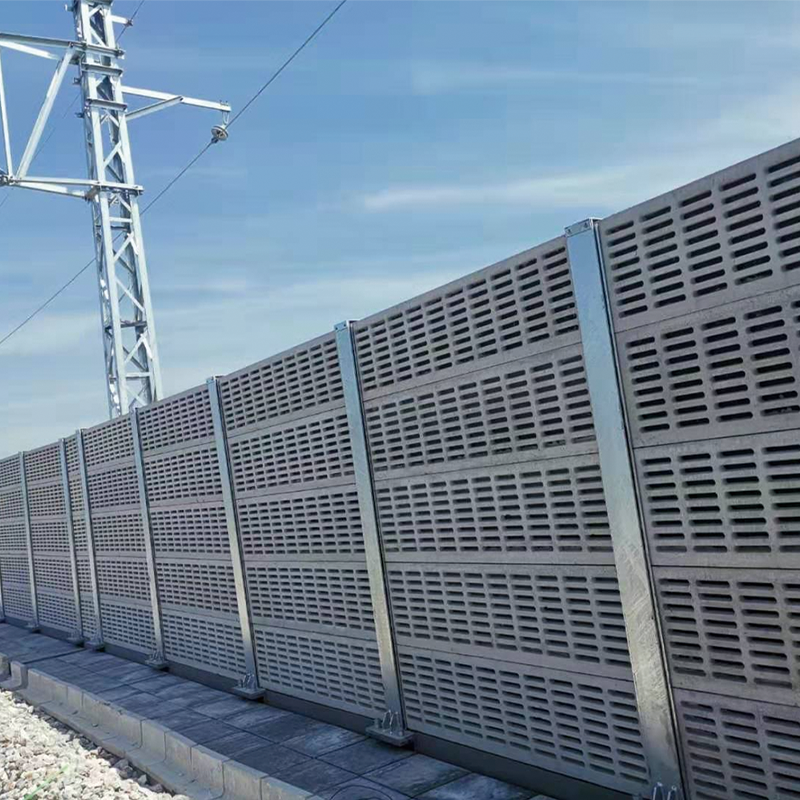
A modular soundproof wall system is built around standardized panels that interlock with precision-engineered connections. The acoustic performance—measured by Sound Transmission Class (STC) or its international equivalent, Rw—depends on the mass of the panels, the seals between them, and the overall system density. A well-designed modular wall can achieve STC ratings in the range of 45 to 55, which puts it squarely in the same territory as traditional stud-wall construction. The difference is that the modular wall can be disassembled, moved, or expanded without losing its acoustic properties. The seals are designed to be reinstalled; the panels are built to be reused.
What makes this work in practice is the attention to the connection points. In a fixed wall, the weak spots are the edges—where the drywall meets the floor, ceiling, and adjacent walls. In a modular system, those edges are the design focus. Gaskets, compression seals, and interlocking profiles ensure that sound doesn't find a path around the panels. The result is a barrier that performs like a permanent wall but behaves like a piece of furniture.
The Financial Case for Flexibility
Upfront cost is the usual objection. A modular soundproof wall system typically carries a higher initial price tag than stick-built construction. The materials are more engineered, the hardware is more specialized, and the installation requires more precision. But the lifecycle math tells a different story.
Consider a commercial space that gets reconfigured every three to five years. A fixed wall has to be demolished and rebuilt each time—labor, materials, disposal, and downtime. A modular wall, by contrast, can be taken down, stored, and reinstalled in a new layout. The panels don't go to waste. The hardware stays with the system. The only cost is the labor to reconfigure, which is a fraction of what it takes to build from scratch. Over a ten-year horizon, the modular option often comes out ahead, not because it's cheaper upfront, but because it amortizes across multiple configurations.
There's also the softer cost: disruption. A demolition project means noise, dust, and weeks of construction. A modular reconfiguration can happen over a weekend. For businesses that can't afford to shut down operations, that alone justifies the premium.
A Real-World Install That Proved the Concept
A mid-sized audio post-production house in the Midwest found itself in exactly this bind. The company had grown from eight editors to twenty-two in under two years, and the original build-out—fixed walls, custom HVAC, the works—was already obsolete. The owners faced a choice: knock down walls and rebuild, or find another solution.
They opted for a modular soundproof wall system to divide their largest tracking room into two smaller editing suites. The system went in over a long weekend. The STC rating of the installed wall measured within a decibel or two of the original fixed walls. Six months later, when the company landed a contract that required a larger recording space, they reconfigured the same panels into a single room again. The whole process took two days. The panels showed no signs of wear, and the acoustic seals performed as well the second time as they did the first.
That kind of adaptability isn't hypothetical—it's the whole point. The post house didn't buy a wall; they bought a capability. The modular system gave them the freedom to respond to changing work volumes without treating every change as a capital project.
Where Modular Falls Short—and Why That's Okay
No solution is perfect for every situation, and modular soundproof walls have their limitations. They tend to be heavier than standard drywall construction because the panels need enough mass to achieve meaningful sound isolation. That means floor loading can be a concern, especially in older buildings. Installation also requires level floors and plumb walls—the system can't compensate for major structural irregularities the way stick framing can.
There's also the question of ultimate performance. For applications that demand extreme isolation—think recording studios with adjacent live rooms or medical facilities with sensitive equipment—a modular system might not reach the highest STC ratings achievable with specialized fixed construction. Some projects legitimately need a bespoke, permanent solution.
But for the vast majority of commercial, institutional, and residential applications, the modular approach delivers more than enough acoustic performance while offering a flexibility that fixed construction simply cannot match. The trade-off is worth making for anyone who anticipates change—and in most industries, change is the only constant.
KHL manufactures modular acoustic systems that balance sound isolation with reconfigurability. Their production processes are built around consistency, ensuring that every panel in a system performs to the same standard, whether it's the first or the fiftieth off the line.