
 EN
EN



The Problem with Rigid Solutions on Unstable Ground
Steep slopes present a fundamental engineering challenge: the soil wants to move downhill, and gravity never takes a day off. Traditional approaches to slope stabilization often rely on rigid structures—concrete retaining walls, shotcrete, or large rock riprap held in place by sheer weight. These solutions work, up to a point. But they have a habit of failing in ways that rigid materials can‘t accommodate.
Concrete cracks when the ground shifts. Riprap scours out from underneath when water finds a path. And once a rigid system starts to fail, the failure tends to be catastrophic rather than gradual. Stone cage nets—often called gabions—take a different approach. They’re flexible, permeable, and remarkably tolerant of the kind of movement that would destroy a concrete wall. That tolerance isn‘t a compromise; it’s the whole point.
How the Mesh Changes the Behavior of Stone
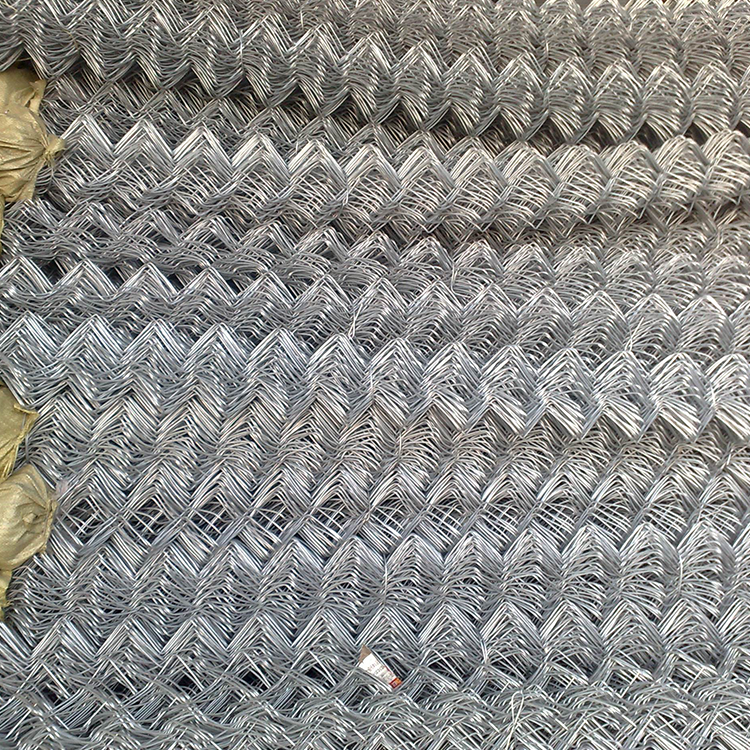
A stone cage net is exactly what it sounds like: a wire mesh container filled with rock. But the engineering behind it is more sophisticated than the name suggests. The mesh is typically hexagonal, woven from steel wire that‘s often galvanized or PVC-coated for corrosion resistance. The rock fill is carefully graded to ensure that the individual stones lock together, creating a dense, interlocking mass that behaves as a single unit.
The genius of the system is that the mesh doesn’t try to hold the stones in place against all forces—it simply contains them. When the slope shifts, the stones can rearrange slightly within the cage. The mesh deforms a little, the stones settle into a new configuration, and the structure remains intact. A rigid wall would crack under the same movement. The stone cage net bends without breaking.
This flexibility is particularly valuable on steep slopes, where differential settlement is almost guaranteed. The soil at the top of a slope behaves differently from the soil at the bottom, and the transition zone in between is constantly adjusting. A rigid structure that spans that transition is fighting a losing battle. A flexible one works with the movement, not against it.
Permeability: The Feature That Prevents Blowouts
Water is the enemy of slope stability. When water accumulates behind a retaining wall, hydrostatic pressure builds up. Eventually, the wall gives way, and the slope comes down with it. This is one of the most common failure modes for rigid slope stabilization.
Stone cage nets solve this problem by being permeable. Water flows through the gaps between the stones, rather than pooling behind the structure. There‘s no hydrostatic pressure to manage because there’s no water buildup. The mesh holds the rock, and the rock filters the water while letting it pass. This drainage capability is not a secondary benefit—it‘s a primary design feature that directly addresses the most common cause of slope failure.
The permeability also means that stone cage nets perform well in areas with high rainfall or fluctuating water tables. Where a concrete wall might require elaborate drainage systems—weep holes, gravel backfill, drainage pipes—the stone cage net handles water naturally. It’s simpler, cheaper, and more reliable over the long term.
A Highway Project That Put the Theory to the Test
A road widening project in a mountainous region of Southeast Asia presented exactly this set of challenges. The existing two-lane highway ran along a steep hillside with grades exceeding 40 degrees in some sections. Previous attempts at stabilization using shotcrete had failed twice in five years—each time during the monsoon season, when saturated soil pushed the rigid facing off the slope.
The engineering team switched to stone cage nets for the rebuild. They installed gabion baskets in stepped layers along the slope face, with geotextile fabric behind the baskets to prevent fine soil migration. The installation was faster than shotcrete, required less heavy equipment, and cost less overall. More importantly, the stone cage nets have held through three monsoon seasons since. The slope has moved—the baskets have shifted slightly, and the stones have resettled—but the structure remains intact.
That project illustrated the key advantage of stone cage nets: they don‘t pretend that the slope is stable. They accept that movement will happen and design for it. The result is a system that outlasts rigid alternatives not by being stronger, but by being smarter.
Where Stone Cage Nets Have Limitations
No solution is universal, and stone cage nets have their limitations. They require a reliable source of suitable rock fill—not every site has good stone available locally, and hauling it in adds cost. The wire mesh also has a finite service life; even with galvanization or PVC coating, corrosion will eventually take its toll, especially in coastal or industrial environments.
Installation on extremely steep slopes—beyond about 1.5:1 (horizontal to vertical)—can be challenging. The baskets need to be placed carefully to prevent stone migration down the slope during filling, and diaphragms within the baskets may need to be spaced more closely to maintain stability. These are solvable problems, but they add complexity and cost.
For slopes that require very high retaining forces—tall vertical faces, for example—stone cage nets may not be the right tool. A reinforced concrete wall or soil nail system might be necessary. But for the vast majority of steep slope stabilization projects, the stone cage net offers a combination of performance, cost, and durability that’s hard to beat.
| Factor | Stone Cage Net | Concrete Retaining Wall | Shotcrete |
|---|---|---|---|
| Flexibility | High | Low | Very low |
| Permeability | High | Low (requires drains) | Low |
| Installation Speed | Moderate to fast | Slow | Fast |
| Tolerance of Movement | High | Low | Very low |
| Typical Service Life | Decades with proper coating | Decades | Variable |
| Cost (relative) | Moderate | High | Moderate |
KHL manufactures stone cage net and gabion products with coatings selected for specific environmental conditions. Their production consistency ensures that the mesh performs as designed, whether the application is highway embankment protection or riverbank erosion control.