
 EN
EN



The coating decision that affects everything
Walk onto any job site where fencing is going up, and you will see the same debate playing out. Galvanized or PVC-coated? The question seems simple, but the answer has implications that stretch far beyond the initial purchase price. Get it wrong, and a fence that looked fine on paper can start showing rust spots within five years. Get it right, and the same perimeter can stand for decades with nothing more than an occasional rinse.
The choice between a galvanized chain link fence and a PVC-coated chain link fence comes down to environment, budget, and expected lifespan. Both have their place. Neither is universally superior. Understanding the tradeoffs is what separates a smart specification from a costly mistake.
What galvanized actually delivers
Galvanized chain link fencing starts with steel wire that gets coated with zinc through a hot-dip process. That zinc layer acts as a sacrificial barrier—it corrodes first, protecting the steel underneath. A well-installed galvanized fence can last anywhere from 15 to 30 years depending on the environment.
The classic silver-gray finish is recognizable everywhere. It is tough, cost-effective, and does the job in most moderate climates. For industrial sites, rural properties, and general perimeter security, galvanized fencing remains the default choice.
But here is the limitation: zinc only protects as long as the coating stays intact. Scratches, impacts, or manufacturing defects that expose bare steel become entry points for rust. In coastal areas where the atmosphere is warm, humid, and infused with chlorides, standard galvanized fencing can severely corrode in as little as five years.
The PVC-coated alternative
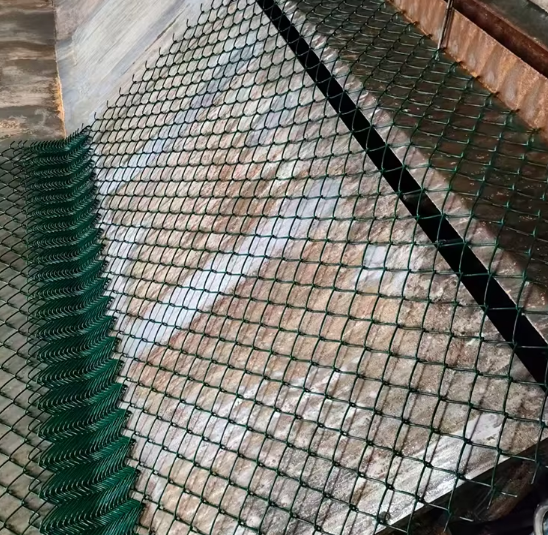
A PVC-coated chain link fence starts with the same galvanized wire, then adds an extruded layer of polyvinyl chloride over the zinc. That plastic layer provides a second line of defense—sealing the steel core away from moisture, salt, and airborne corrosives.
The coating thickness typically ranges from 1mm to 3mm, creating a smooth, durable finish that significantly extends the fence's service life. Under ASTM F668, PVC coatings are classified by how they are applied. Class 2b represents the highest standard—the PVC is fused and chemically bonded to the galvanized surface, creating superior adhesion that resists peeling and cracking.
That extra protection comes with practical benefits. PVC-coated fences resist UV degradation, maintain their color longer, and require less maintenance over their lifespan. They also come in colors—green, black, and other options that blend better with residential or commercial landscapes.
The numbers that separate them
| Factor | Galvanized (Hot-Dip) | PVC-Coated (Class 2b) |
|---|---|---|
| Typical lifespan | 15-30 years | 20-30+ years |
| Initial cost | Lower | Higher (20-40% premium) |
| Corrosion protection | Good—zinc barrier | Excellent—zinc + PVC dual layer |
| Color options | Silver-gray only | Multiple colors available |
| Maintenance | Moderate—rust inspection needed | Low—occasional cleaning |
| Best environment | Moderate climates, industrial | Coastal, humid, high-UV |
When one clearly beats the other
A Texas-based ranch operation installed a galvanized chain link fence along a 2-mile perimeter fifteen years ago. The fence has held up well through dry summers and occasional storms. No rust issues to speak of. The galvanized coating was the right call for that environment.
But a different story played out at a coastal resort in Florida. The original specification called for galvanized fencing around the tennis courts. Within four years, rust spots appeared at every point where the mesh had been cut or damaged during installation. Salt-laden sea air accelerated the corrosion. The resort replaced the entire perimeter with PVC-coated fencing and has not touched it since. The higher upfront cost paid for itself within the first maintenance cycle.
The lesson is straightforward: galvanized works fine where the environment is forgiving. PVC-coated becomes essential where moisture, salt, or industrial pollutants are present. For residential settings where aesthetics matter, the color options alone can justify the PVC premium.
The honest limitations
Neither option is perfect. Galvanized fencing can develop white rust—a zinc oxide deposit—in damp conditions where airflow is restricted. That is usually cosmetic but can accelerate corrosion if left unchecked.
PVC-coated fencing has its own vulnerabilities. The plastic layer can be damaged by impact or abrasion, exposing the galvanized core beneath. Once the coating is breached, corrosion can spread underneath the PVC, hidden from view until significant damage has occurred. Repairing a damaged section of PVC-coated fence is also more involved than patching a galvanized one.
There is also the question of UV exposure. Prolonged sun can cause PVC coatings to fade or crack over time. High-quality Class 2b coatings resist this better than lower grades, but the risk remains in extreme desert or high-altitude environments.
Making the call for your project
The choice between a galvanized chain link fence and a PVC-coated chain link fence is not about which is "better." It is about which fits the site conditions and the owner's priorities.
For budget-conscious projects in dry inland areas, galvanized fencing delivers reliable performance at the lowest cost. For coastal installations, high-humidity regions, or anywhere aesthetics matter, the PVC-coated option is worth the premium. And for projects that need both durability and visual appeal—think commercial developments, schools, or residential communities—the PVC-coated fence is increasingly the default specification.
Companies like KHL have been manufacturing both galvanized and PVC-coated chain link fencing for years, with products used across industrial, commercial, and residential applications. Their experience across different climate zones and project types reflects the reality that the best fence is the one that matches the environment it will face.