
 EN
EN



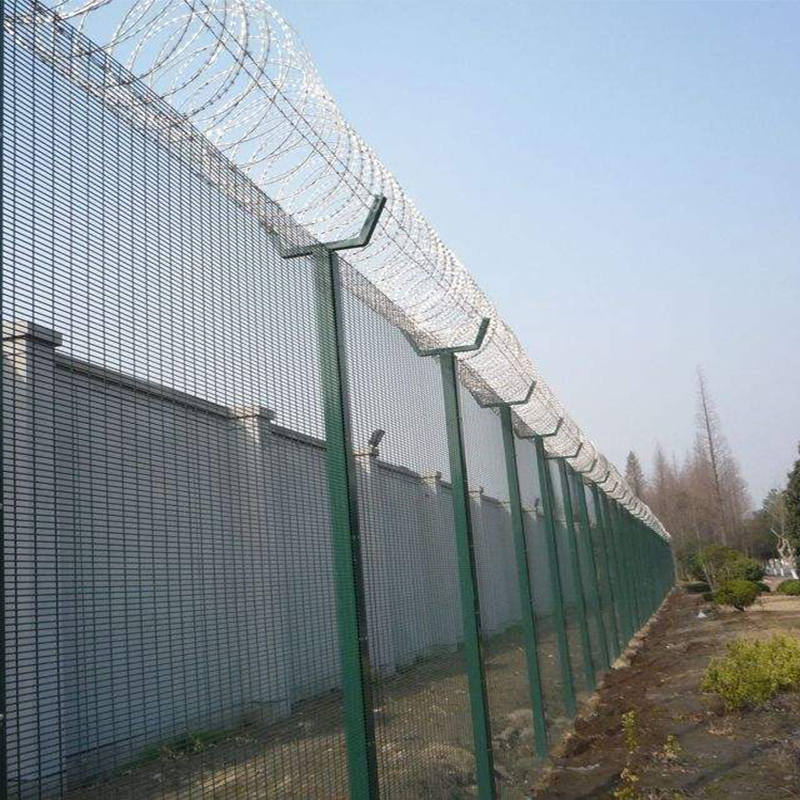
More Than Just Wire with Spikes
Walk past any perimeter fence, and the wire running along the top usually doesn‘t get a second glance. It’s just barbed wire, right? Sharp stuff meant to keep things in or out. But the reality is more nuanced. What looks like a single category of product is actually a family of related but distinct materials, each with its own construction, performance characteristics, and appropriate use case.
Choosing the wrong type isn‘t just a matter of overspending or underspending—it’s a security decision with real consequences. A farm boundary needs different protection than a prison perimeter. A temporary construction site has different requirements than a permanent industrial facility. Understanding the differences between single-strand, twisted, and razor wire is the first step toward making a choice that actually fits the threat level and the budget.
Single-Strand Barbed Wire: The Lightweight Option
Single-strand barbed wire is exactly what the name suggests: one continuous strand of wire with barbs crimped or wrapped around it at regular intervals. It‘s the simplest form of barbed wire, and also the least expensive. The barbs are typically spaced every four to six inches, with two or four points per barb depending on the configuration.
The primary advantage of single-strand wire is its low cost and ease of installation. It’s light enough to be handled by one person, and it doesn‘t require heavy-duty tensioning equipment. That makes it popular for temporary fencing, agricultural boundaries where the primary goal is livestock containment rather than human deterrence, and low-security perimeters where the wire serves more as a visual cue than an actual barrier.
The downside is equally clear: single-strand wire is relatively easy to cut or break. A pair of bolt cutters makes short work of it, and the barbs, while unpleasant, are not a serious obstacle to a determined intruder. It also doesn’t hold tension as well as multi-strand options, so it tends to sag over time, especially in long spans. For applications where security is a secondary concern and cost is the driving factor, single-strand gets the job done. For anything beyond that, it‘s underpowered.
Twisted (Double-Strand) Barbed Wire: The Workhorse
Twisted barbed wire—often called double-strand—consists of two wires twisted together, with barbs placed between the twists. The twisting action gives the wire significantly higher tensile strength than the single-strand version. It holds tension better, resists sagging, and is substantially more difficult to cut through. The barbs themselves are also usually more substantial, with four points rather than two.
This is the barbed wire that most people picture when they think of the product. It’s the standard for permanent agricultural fencing, property boundaries, and medium-security industrial perimeters. The double-strand construction means that even if one strand breaks, the other remains intact—a redundancy that adds a layer of durability in harsh conditions. Surface treatments like hot-dipped galvanization or PVC coating extend the service life significantly, especially in coastal or high-humidity environments.
The trade-off is cost and handling. Twisted wire is heavier, requires more tensioning equipment, and takes longer to install. But for any application that needs to last more than a few seasons, it‘s the baseline choice. Single-strand might save money upfront; twisted wire saves money over time by not needing replacement as frequently.
Razor Wire: A Different Category Entirely
Razor wire is often grouped with barbed wire, but that’s a mistake. The two products are fundamentally different in design, performance, and application. Where barbed wire consists of wires with barbs attached, razor wire is made from a continuous steel strip that‘s been cold-rolled into sharp blades, then wrapped around a high-tension core wire. The blades are pre-formed and rigid, not twisted into place.
The result is a barrier that is dramatically more difficult to breach. The blades are sharp enough to cause serious injury, and the continuous strip construction means the wire doesn’t stretch or deform the way barbed wire does. It‘s also much harder to cut—not because the steel is stronger, but because the blade geometry deflects cutting tools and makes it difficult to get a clean bite. Razor wire is typically specified for high-security applications: prisons, military installations, border fences, and critical infrastructure.
The cost reflects that capability. Razor wire can run two to three times the price of barbed wire per linear meter. It also requires specialized handling equipment and installation expertise—the blades are dangerous to work with, and improper installation can leave gaps that defeat the purpose. But for applications where the consequence of a breach is high, the investment is non-negotiable.
Comparing the Three Side by Side
| Feature | Single-Strand | Twisted (Double-Strand) | Razor Wire |
|---|---|---|---|
| Construction | One wire with crimped barbs | Two twisted wires with barbs | Steel strip blades on core wire |
| Tensile Strength | Low | High | Very high |
| Cut Resistance | Low | Moderate | High |
| Deterrence Level | Low—minor discomfort | Moderate—painful but manageable | High—serious injury risk |
| Typical Use | Temporary, livestock | Permanent ag/industrial | Prisons, military, high-security |
| Relative Cost | Lowest | Moderate | Highest (2-3x barbed wire) |
A Project That Required the Right Choice
A logistics company operating a distribution center in the Southeast learned this lesson the hard way. The original perimeter spec called for single-strand barbed wire—cheap, quick to install, and good enough for what the facility manager thought was a low-risk site. Within eighteen months, the fence had been cut in three places, and inventory had walked out the door each time.
The security audit that followed was blunt: the single-strand wire was a visual deterrent, not a physical one. The company replaced it with twisted barbed wire on the outer fence line and added razor wire coils on the interior-facing security fence around the high-value storage area. The twisted wire handled the bulk perimeter; the razor wire secured the assets worth protecting. The combination cost more than the original installation but less than the losses they had already incurred. The facility hasn‘t had a breach since.
That’s the practical reality of choosing between these products. Each has a role, and the role determines the choice. Putting razor wire on a cattle fence is overkill. Putting single-strand on a prison fence is negligence. The right answer depends entirely on what the wire needs to do.
KHL manufactures barbed wire and razor wire products across multiple configurations, with coatings and materials selected for specific environmental conditions. Their production standards align with established specifications like ASTM A121 for metallic-coated barbed wire, ensuring that what ships from the factory meets the requirements of the job site.